Sketchnote: A Friendly Handwritten Font for Creative Design
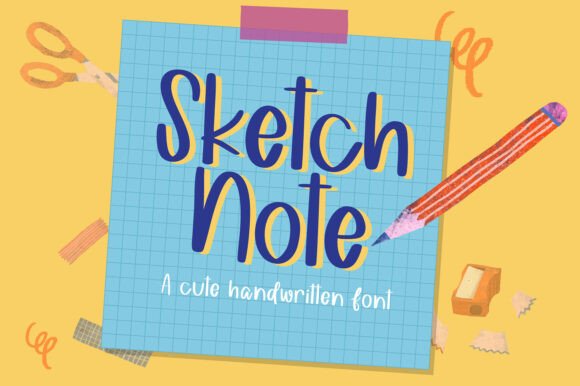
In a digital world saturated with clean, geometric typefaces, a handwritten font like Sketchnote offers an immediate and powerful connection. It’s more than just letters on a screen; it’s a voice, a personality, and a touch of human warmth that can transform a standard design into a memorable experience. This sweet and friendly font, with its natural and unique style, is incredibly fitting for a vast pool of designs, proving that the only limit is your imagination.
Why Handwritten Typography Matters in Modern Design
Effective visual communication hinges on evoking the right emotion and establishing a clear hierarchy. Sketchnote excels here by adding an organic, approachable layer to your visual design. In an era where authenticity drives engagement, its imperfect, personal strokes cut through the noise of polished, impersonal aesthetics. This makes it a valuable creative asset for designers aiming to build brand identity that feels relatable and human, rather than corporate and distant.
Practical Applications for Sketchnote
The versatility of Sketchnote allows it to enhance numerous creative projects across both digital and print design. Its friendly character makes it particularly effective where clarity and warmth are paramount.
- Branding and Logo Design: Use it for brand marks, logos, or taglines to convey creativity, craftsmanship, and a personal touch. It’s ideal for startups, artisanal products, and lifestyle brands.
- Marketing and Social Media Graphics: Create eye-catching headlines for Instagram posts, Facebook ads, or Pinterest pins. Sketchnote adds personality to digital marketing assets, increasing scroll-stopping power.
- Editorial and Web Design: Employ it for pull quotes, section headers, or annotations in editorial layouts. In UI design, it can guide users with friendly tooltips or highlight special features without disrupting the overall visual hierarchy.
- Packaging and Merchandise: On product packaging, it can emphasize natural ingredients or handcrafted quality. It’s also perfect for merchandise like mugs, notebooks, or apparel where a personal, artistic feel is desired.
- Presentations and Digital Products: Break the monotony of standard slide decks by using Sketchnote for key points. It helps maintain audience engagement and makes complex information more digestible.
Tips for Effective Use
While Sketchnote is a powerful tool, strategic application is key to maintaining professionalism and readability.
- Pair with Simplicity: Balance its decorative nature with a clean, sans-serif font for body text. This ensures a strong visual hierarchy and preserves legibility, especially in longer paragraphs or at smaller sizes.
- Consider Scalability: Test the font at various sizes. While it works beautifully for headlines and logos, ensure it remains clear when scaled down for mobile UI or fine print on packaging.
- Maintain Brand Consistency: If integrating Sketchnote into an existing brand system, audit your color palette and other design elements. The font should complement your overall aesthetic, not clash with it.
- Use with Purpose: Deploy it to draw attention to a specific call-to-action, a friendly message, or a creative headline. Overuse can dilute its impact and make your design feel cluttered.
Ultimately, the strength of any design lies in thoughtful, intentional choices. Selecting a typeface like Sketchnote is a decision to infuse your work with character and approachability. By understanding its strengths and applying it with a strategic eye for composition and context, you can elevate your creative projects, strengthen your brand’s communication, and deliver a visual experience that truly resonates with your audience. Quality creative assets are the building blocks of exceptional design, enabling both beauty and clarity in every project.